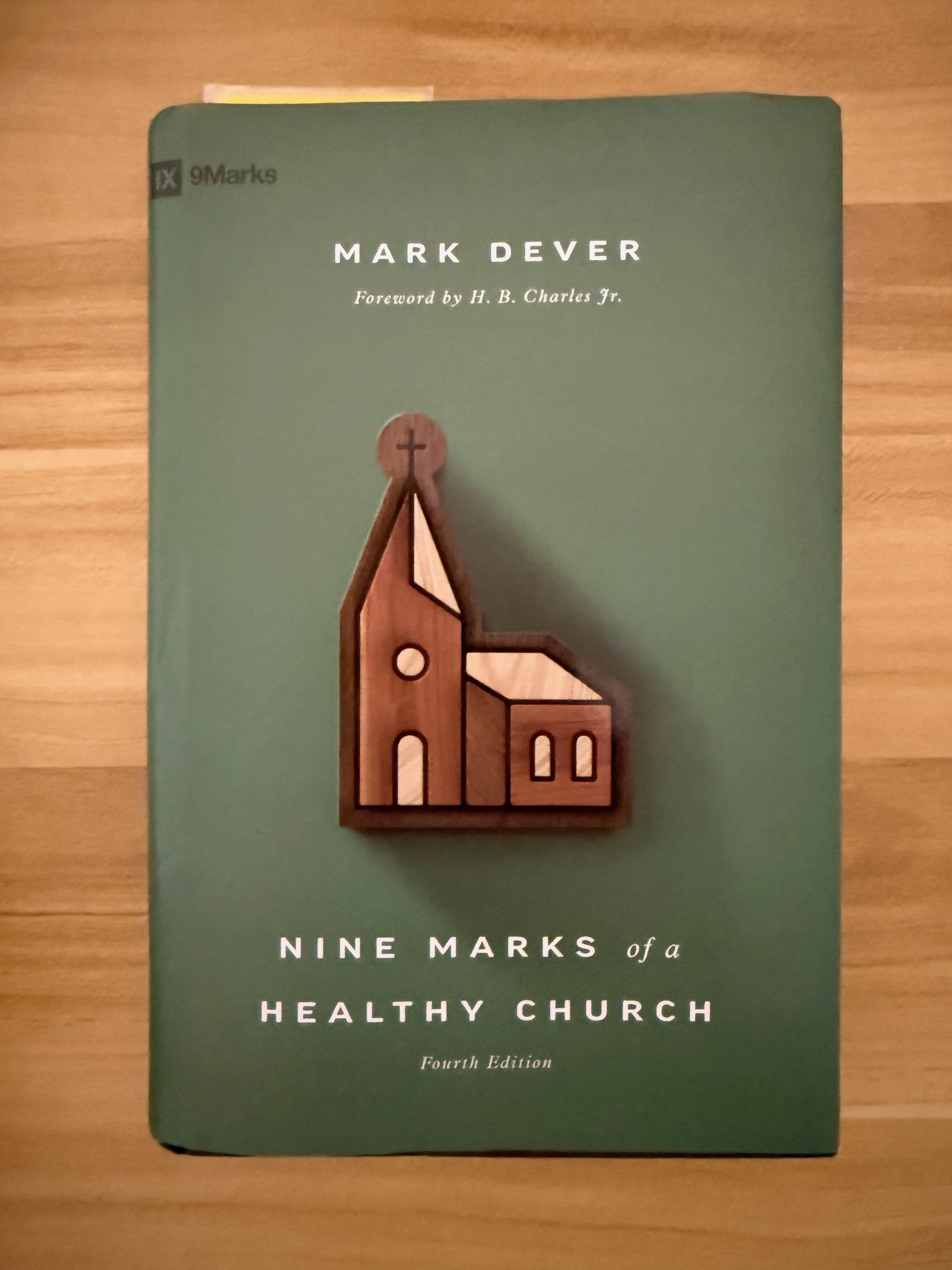
9 Marks of a Healthy Church by Mark Dever
Church Growth Strategies
Megachurches are a big deal in America today. I recently read an article in the Economist that included a quote about how 70% of Americans who go to church now attend a megachurch. When thinking about church health, the topic of this book, it is very important to understand megachurches. A simple definition found on Google tells us that a megachurch is “a church with an unusually large congregation”. Size is the main component of megachurches.
When a church congregation reaches the limit of people that their building can support, they can take different routes. Sometimes, they just build a bigger building or hold more services, keeping everyone coming to the same place and packing more in. Often, they might start many campuses in a large geographic area, sometimes with a preacher live streamed to all of them (I visited a church in western NC like this once). Sometimes they do this as a growth strategy (think of Elevation Church, Life.Church, or Church of the Highlands for examples of this). Occasionally, they may split up into multiple independent churches (with their own pastors, leadership, etc), and send people to the closest campus to them. Megachurches are churches that take the first or second of these routes and instead of starting new independent congregations, they expand their size. 70% of people who go to church go to one of these.
Goals of Megachurches
Megachurches are often known for having many flashy lights and sound effects, big bands, slick videos, and scripted, attractive worship services. They have an outward focus in their worship. They have a goal of bringing new people in and making it friendly and welcoming to go to church. After all, it is hard to become megachurch sized without having a ministry primarily focused on bringing many people in. In this book, Mark Dever questions this core megachurch principle that an outward focus in worship is ideal. He makes the claim that a church service should not be primarily how many new people are brought in. He says that it is like a salesman watering down a new drink to make it easier to share. It allows it to reach numerically more people quickly, but in the long term it hurts the product. Churches can do the same thing.
One of my friends who is a strong believer attends one of the largest and most prominent megachurches in America, and he recently attended my medium-sized church on a Sunday morning. His takeaways were that people felt more committed at my church. It felt like people did not simply come in to receive the service, then immediately leave without talking to anyone. He felt that people cared about each other in the church. While an outward focus can be more helpful for unbelievers visiting, it might lead to a lack of edification for the believer who attends. Should we optimize for more people to come into church? If this is not a good target, what should be our goal? Even believers who do not lead a church should consider this.
Note: By outward focus in worship services, I am talking about the “seeker friendly” style of worship that is found in many megachurches.
Focus of the Book
A wise writer, Dever does not focus on condemning churches for their folly and flaws. A simple search on Reddit for “megachurch” will find enough of that to go around. Instead he admits that every church will be flawed by definition, because it is made of flawed people. He instead spends his time promoting the marks of a healthy church. He holds up 9 marks that are good signs of health in a church: expositional preaching, Gospel doctrine, and a right understanding of conversion and evangelism, church membership, church discipline, discipleship and growth, church leadership, prayer, and missions. (I read the fourth edition, and older editions have a slightly different list of marks.) The most important marks are expositional preaching and gospel doctrine. All others flow from these.
Think about it: how is anyone to have a good, Biblical understanding of missions, prayer, or any of the other marks if the Bible (and right application of it) is not the focus of teaching in the church. A heavy focus is put on preaching and teaching the Word as it was written, not just choosing topics and finding Scripture to support that. If you only teach topically, you in a sense come up with what you want to say and find Bible verses that support that. A congregation that only hears this will be shaped to the mind of the preacher, not to the mind of God. There is a time and place for topical teaching, but most teaching should be book by book reading through the Bible, both Old and New Testaments, and teaching what it says in every part of the book. Not skipping inconvenient or hard parts. This is how God intended the text to be read, taught, and preached. Teaching rightly this way shapes the listener to God’s mind. In my opinion, this is a must-have for any church I would attend.
The teaching in a church must also apply the Word of God correctly. This is what the second mark, Gospel doctrine, focuses on. While many things are debatable, the Gospel is not. I once spoke with some LDS leaders, asking them about their faith. They shared verses from Genesis about the fall, claiming that it was in fact a good thing, because it opened us up to go higher and become better than we could before. While it took us farther from God, it also allowed us to begin working our way up to Him. The LDS Church teaches these verses wrongly. The Fall was when Adam and Eve rejected God and sinned, trying to become their own God. Their actions led to the worst day in history. Every human alive today is enslaved to sin because of this. While I will not dive into if it would be better that the Fall never happened, it was certainly not a good thing. Examples like these show how we must explain what the Word of God says correctly. It does not give a message of self-help or happiness or prosperity. It gives a message of the horrible, hopeless human condition and what Jesus did to save us. Rightly preaching and understanding the Word of God as a congregation leads to having a rightly structured church with the right focus.
Membership
Mark Dever has a stronger view of church membership than most Christians. He believes that it is an important thing, not just a convenience. Membership in a church should require a strong commitment to other members, and a strong care about them. It also requires being willing to correct other members through various stages of church discipline, to guard the reputation of the church, God’s name, and other members in the church. I agree with this and wish it was more strongly emphasized in our churches today. Many people today believe that simply attending church is enough. But the church is not the building, it is a group of people. Being a part of and committed to the church community is almost a necessity in living the Christian life. Many Christians today ignore this to their detriment.
Weaknesses of the Book
The only real weakness I felt in the book was that it had a too American focus. Those reading it from a different cultural context than America and Canada would feel confused by some metaphors and explanations. He does bring in diverse voices, such as Jamaican pastor Moses Hall, but some of the application, stories, and references are focused on America. This limits the book’s use in churches in other contexts.
Conclusion
In the end, a healthy church must be focused on what God wants, not what we want. Mark Dever believes, as I do, that this should be not a focus on numerical growth or being attractive to the world. It should be a focus on the Word of God, on loving those we are in community with, on desiring others to come to know Christ. The church should not be a play that we attend because we like it, but a community we are a part of because we love God and His love in our hearts causes us to love our fellow Christians. This is something we are commanded to do in the Bible and get to enjoy as a blessing from God. If that sounds interesting to you, you might consider attending a local church and possibly reading the book to think about what a healthy church should be like. You can buy it here (not an affiliate link).